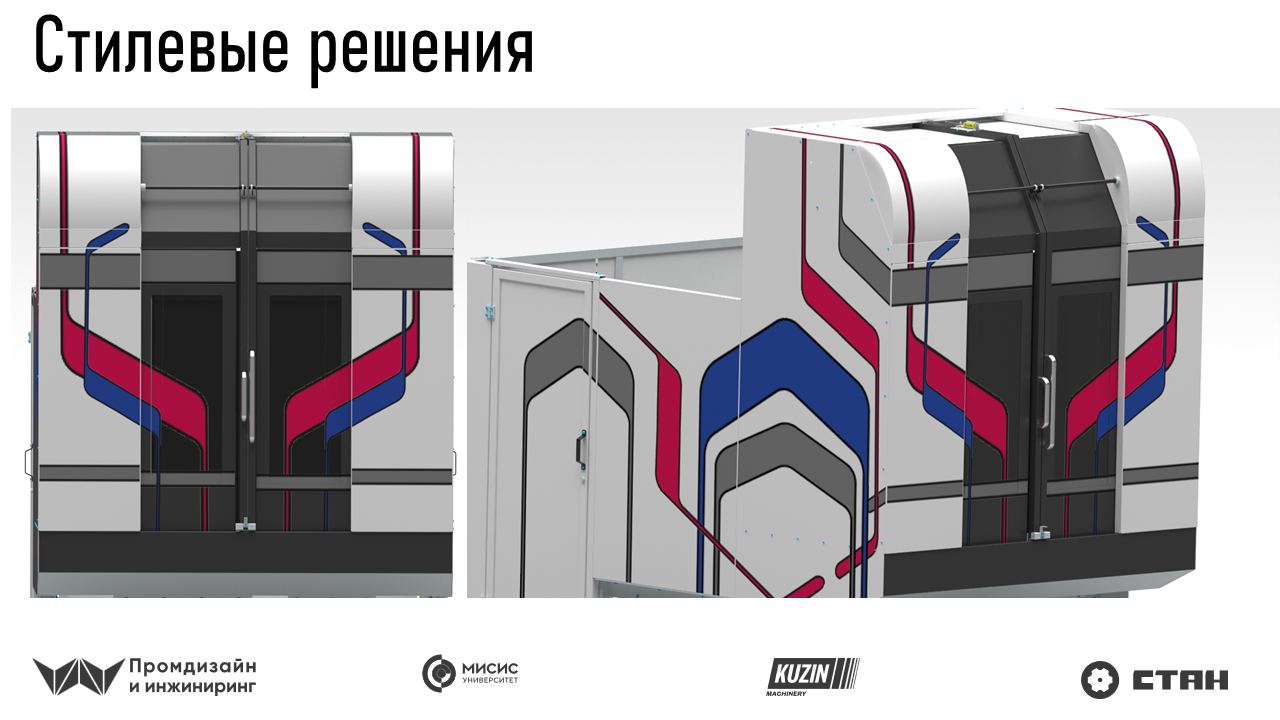
SXS512 Cabinet Enclosure — Cylindrical Grinder Housing in STAN Design Language
Designing a protective enclosure for the SXS512 grinder: recognisable STAN Group identity, signature perforation, pneumatic door drive, and ergonomics for gloved hands. Presented at the Design Sprint competition.
About the project and client
STAN Group is a Russian manufacturer of metalworking equipment building a unified design system for its entire machine line. A consistent design language is a strategic decision: a buyer should recognise STAN equipment at a trade show, on a shop floor, and in a catalogue.
The SXS512 is a cylindrical grinding machine. Its enclosure performs several functions simultaneously: protecting the operator from coolant spray and swarf, sound attenuation, providing access to the working zone during part changes, and ventilating the drive. The design must address all of these — while remaining stylistically part of the STAN family.
Perforation on the panels is not decoration. It solves three problems at once: drive ventilation, weight reduction, and brand visual signature. One element — three functions. That's industrial design.
Constraints and requirements analysis
Safety requirements
A grinding machine enclosure operates in constant contact with coolant, metal swarf, and abrasive dust. Panel material: sheet steel with powder coating resistant to cutting fluids and mechanical damage. Door seals: perimeter labyrinth profile preventing leaks.
Ergonomics requirements
A grinding machine operator opens the enclosure door many times per shift — during part loading and unloading. Handle force and operating frequency determine cumulative load. Handles were designed for grip in work gloves: sufficient size, convenient angle, power grip without requiring precise hand positioning.
Drive ventilation
The grinding wheel drive requires forced ventilation. Panel perforation provides airflow while maintaining the enclosure's protective function — hole size and placement are calculated to prevent large swarf particles from reaching the drive.
Design decisions
STAN signature perforation
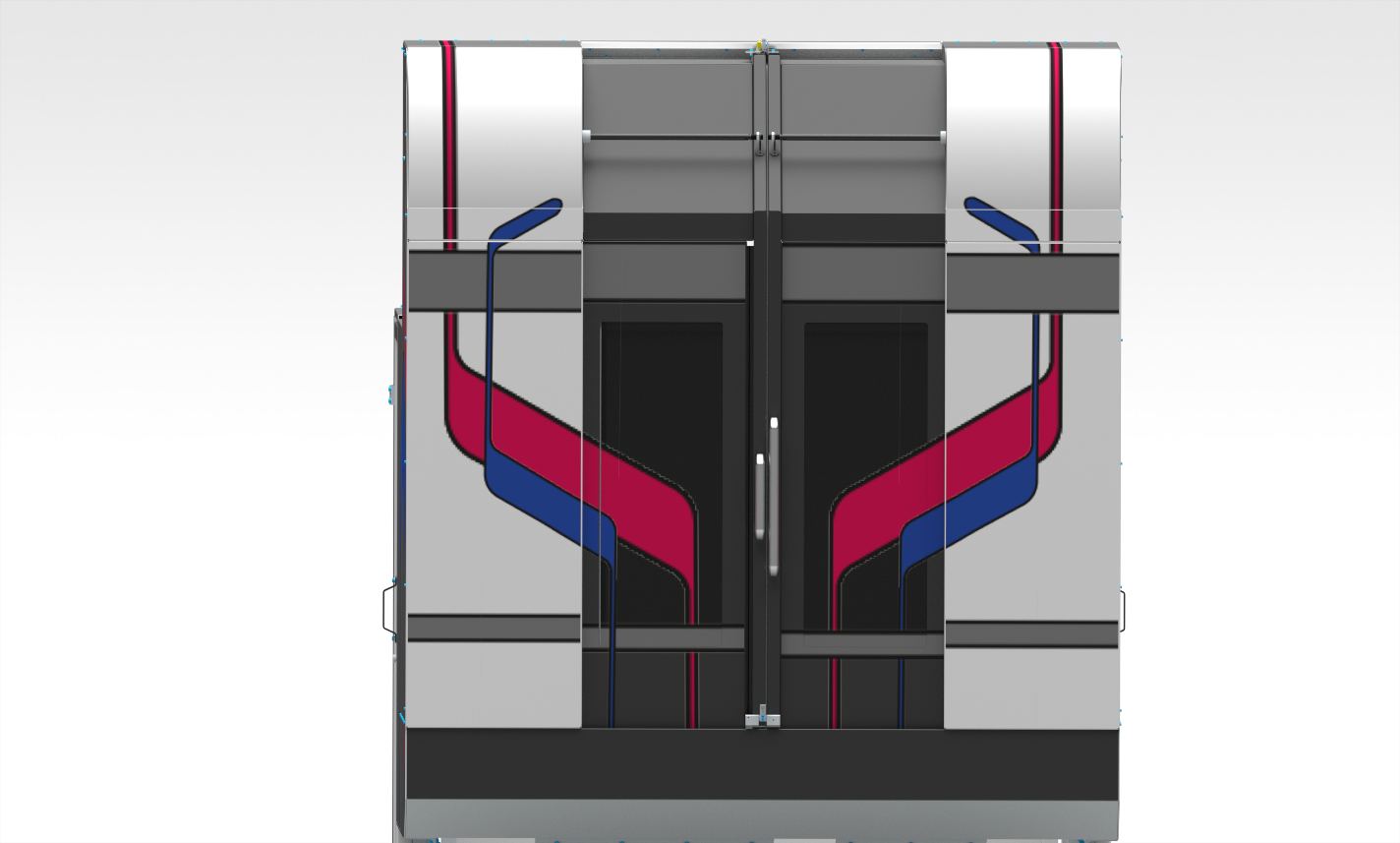
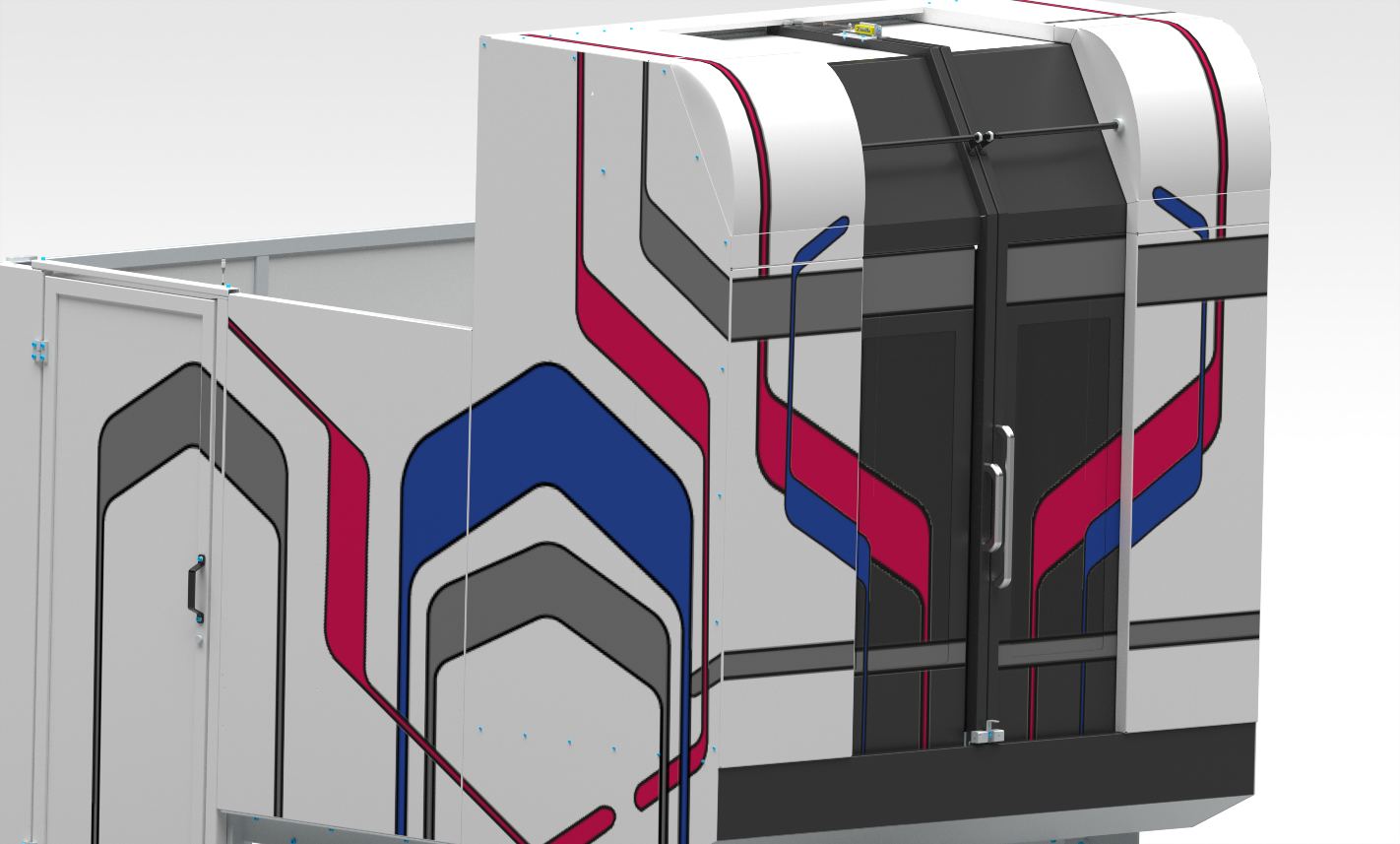
The perforation pattern is the key element of STAN's design language — hole diameter, pitch, and placement are unified across the entire line. On the SXS512, perforation appears at functionally meaningful zones (drive ventilation) and in decorative areas (lower side panels), creating visual lightness for a heavy structure.
Two-size door handles
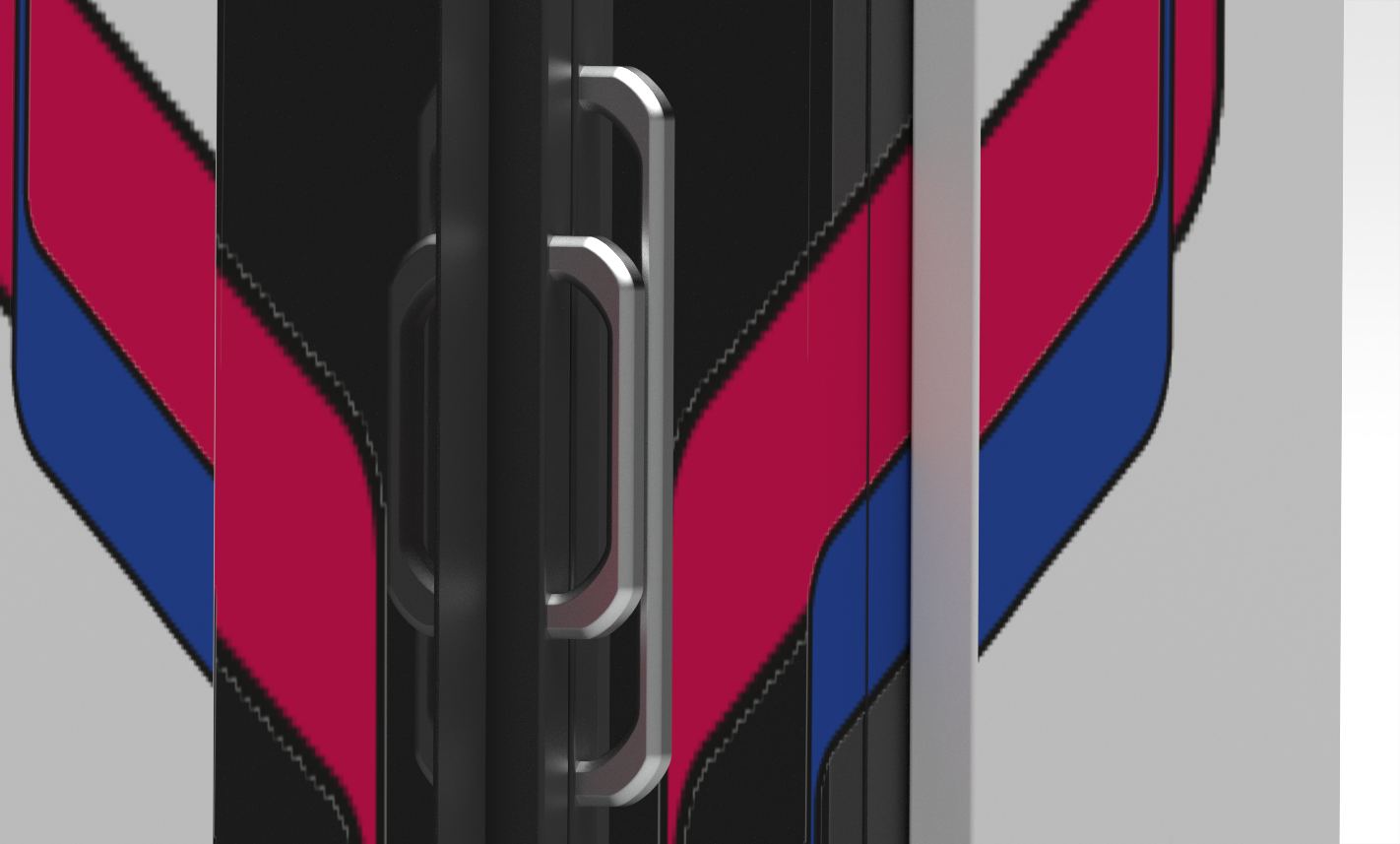
Main door: large handle for full-fist power grip. Service panels: smaller handle for two-finger precision opening. Both handle types belong to the same form family, differing only in size. This creates a visual hierarchy that tells operators which elements are operational and which are for service access.
Pneumatic drive for the main door
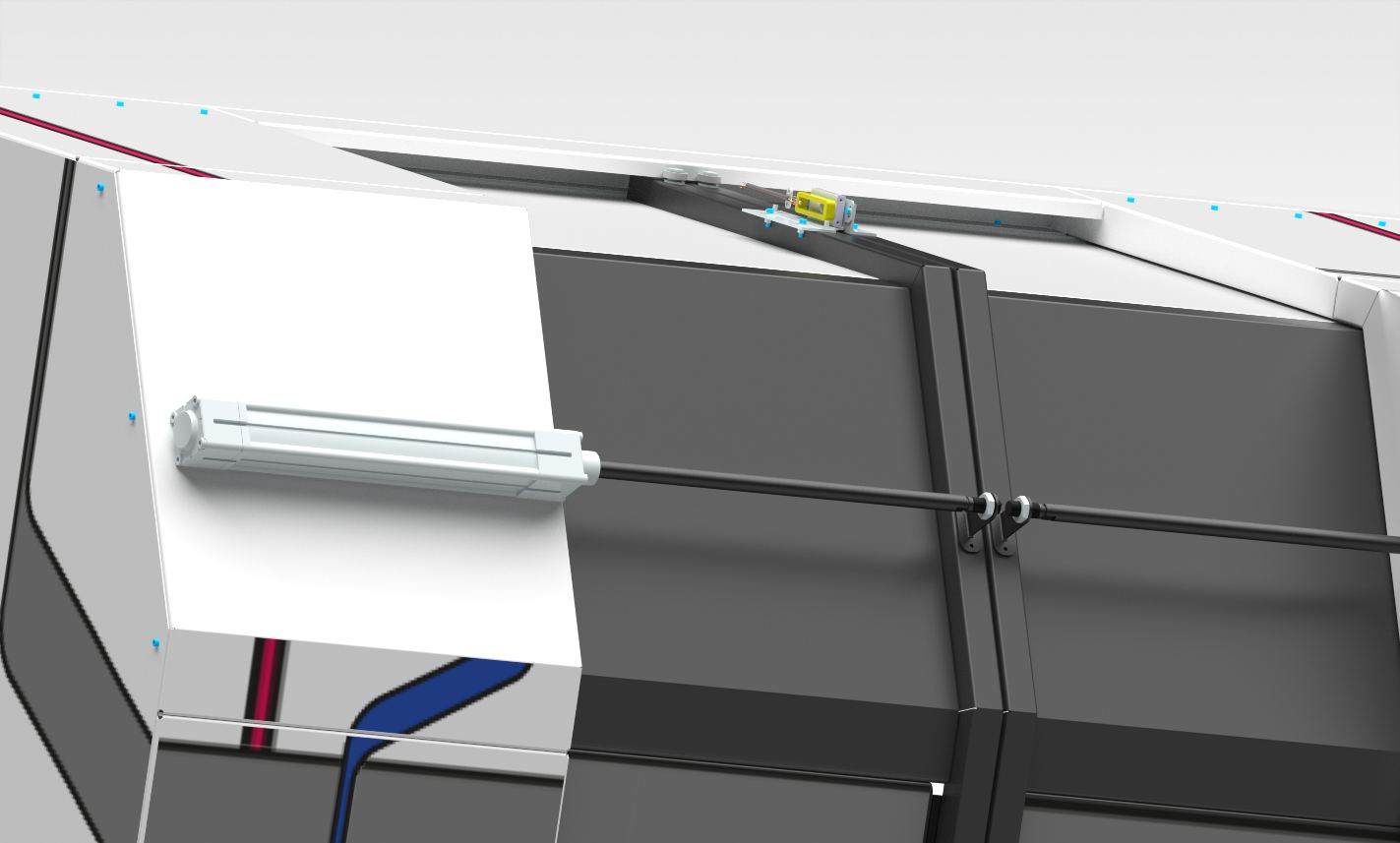
The main enclosure door is pneumatically actuated. This decision follows from working scenario analysis: at high opening frequencies (10–20 times per hour on some operations), the cumulative shoulder load from manual door operation becomes significant. Pneumatics reduces opening effort to a button press, with the added benefit of consistent closing force for reliable sealing.
Result
The SXS512 enclosure design is ready for production handoff. The solution matches the STAN Group design language and was recognised at the Design Sprint competition. Perforation, pneumatic actuation, and two-size handles address specific ergonomic and functional problems — not cosmetic ones.
The specifics of machine tool design
Machine tool design is an extremely specific domain of industrial design. There's no consumer in the usual sense: there's an operator who spends 8 hours next to the machine, and a maintenance engineer who services it. Their requirements often conflict. The designer must find a solution that satisfies everyone — and still looks like a single considered object rather than a set of compromises.
A technical background is critical here: understanding what's behind each panel before designing access to it is the prerequisite for meaningful decisions. Without that, enclosure design is guesswork dressed as aesthetics.