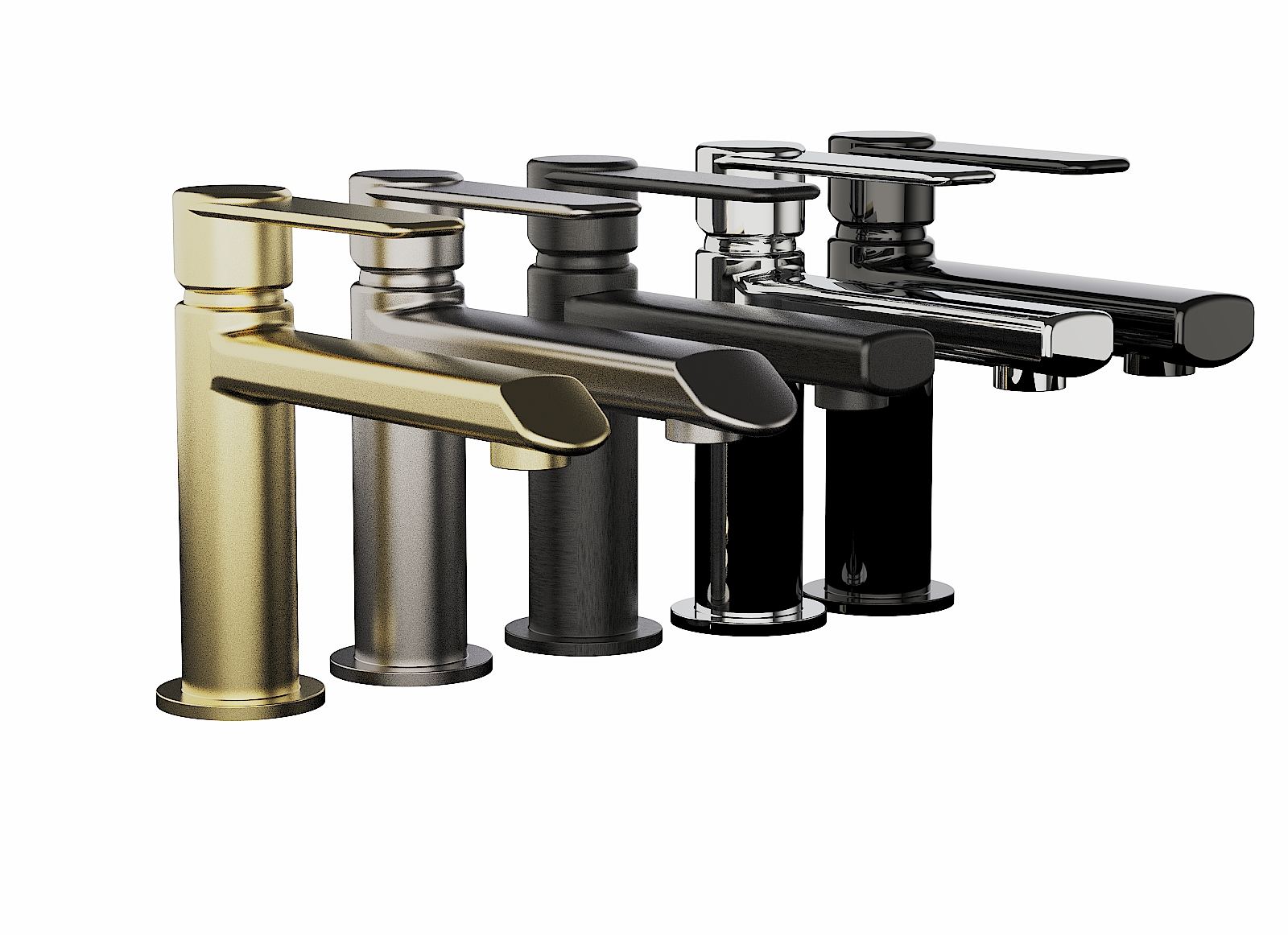
Faucet Concept — Modern Aesthetics Without Higher Production Cost
A faucet with a clean contemporary look, compatible with standard cartridge and aerator — 10-minute DIY replacement, five finish options, one CAD model for serial production.
The brief
The faucet market splits cleanly into two segments: inexpensive products with dated aesthetics and high-end designer pieces with proprietary internals. A mid-tier manufacturer wanting a contemporary look without a dramatic price increase is stuck. A unique cartridge means unique spare parts, logistics, and service contracts — all of which land in the price.
The concept's brief: prove that a modern, clean faucet design is achievable without abandoning a standard cartridge and aerator. New body, standard internals, 10-minute DIY service.
The hardest part of designing consumer products is holding the balance between "I want to make it beautiful" and "this has to be cheap to manufacture." In this project, the external geometry is dictated by the internal: the body was designed around the standard cartridge, not the other way around.
Market analysis
Around 40 faucet models were analysed across the price range before sketching began. A clear pattern emerged: excessive ornamentation in the low price tier (chrome grooves, fake-metal textures) and minimalism with soft forms at the top. The key insight: minimalist design at the top tier doesn't require complex manufacturing operations — it requires precise joint execution and high-quality finishing. Finish, not geometry, separates an expensive faucet from a cheap one.
Engineering decisions
Body designed around a standard cartridge
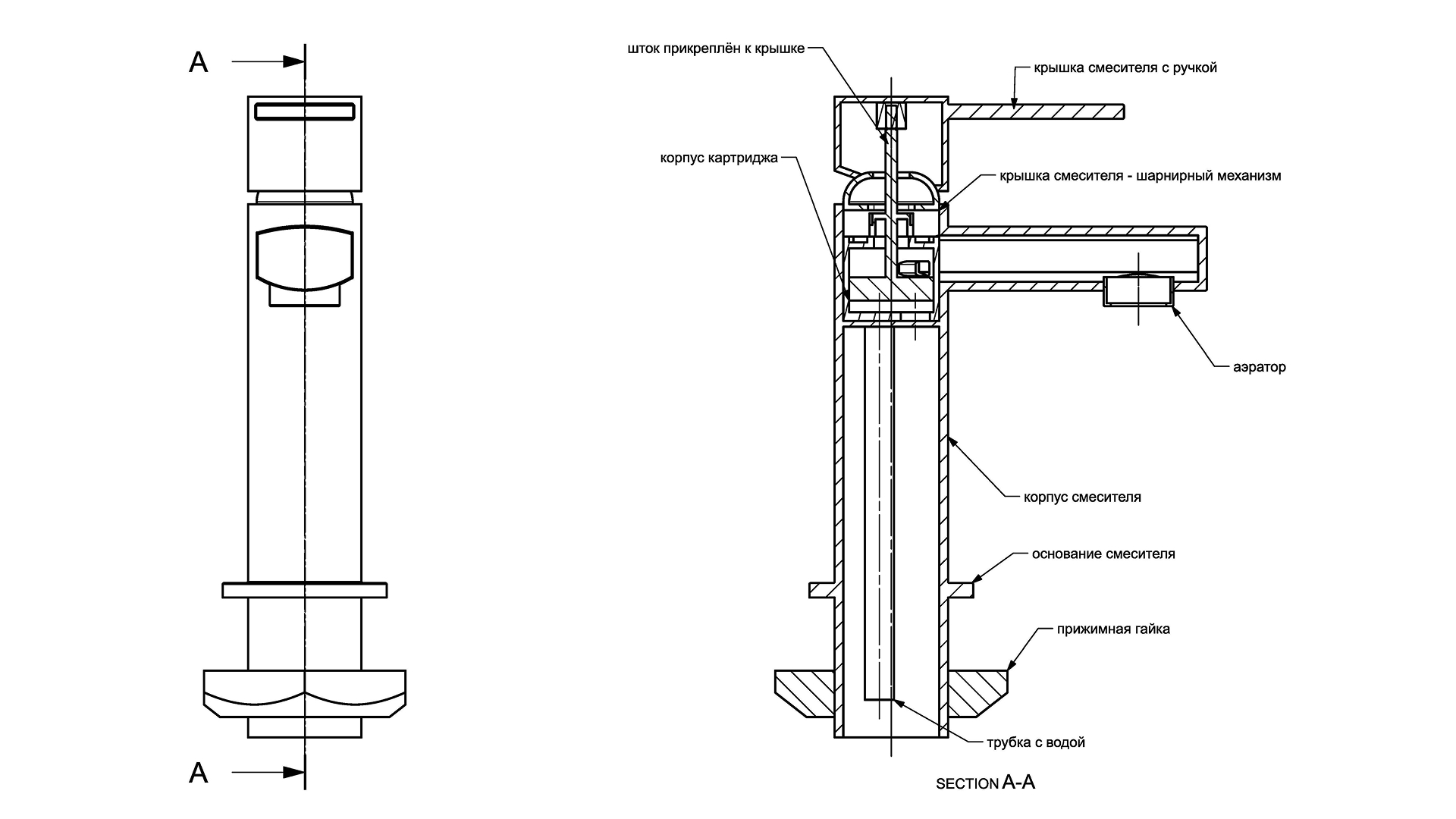
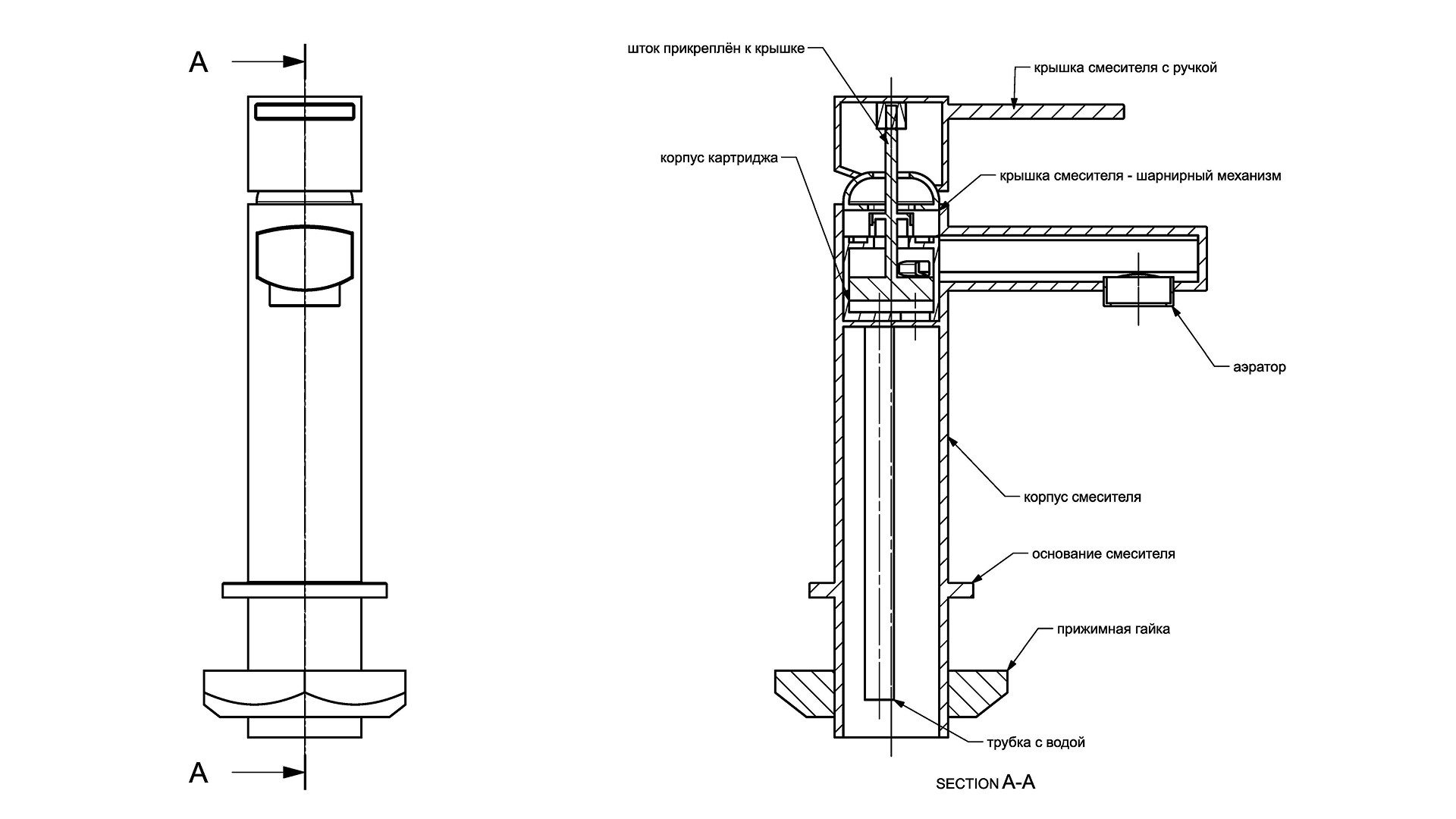
The internal body geometry is designed to fit standard 35 mm cartridge dimensions and M24×1 aerator thread. No proprietary solutions — any manufacturer's cartridge (Sedal, Kerox, ceramic disc-type) fits without adapters. An end buyer can service the faucet at any plumbing supply store without calling a specialist.
The cartridge seat accounts for casting tolerances: correct draft angles for mould ejection, stiffening ribs at maximum load points during cartridge nut tightening.
Handle — grip ergonomics
The handle form supports two grip modes: precise two-finger control (temperature adjustment) and full-palm grip (shut-off at full-open position). The ridge on the handle end is not decoration — it's a tactile reference indicating the current position without visual checks.
Five finishes — one body
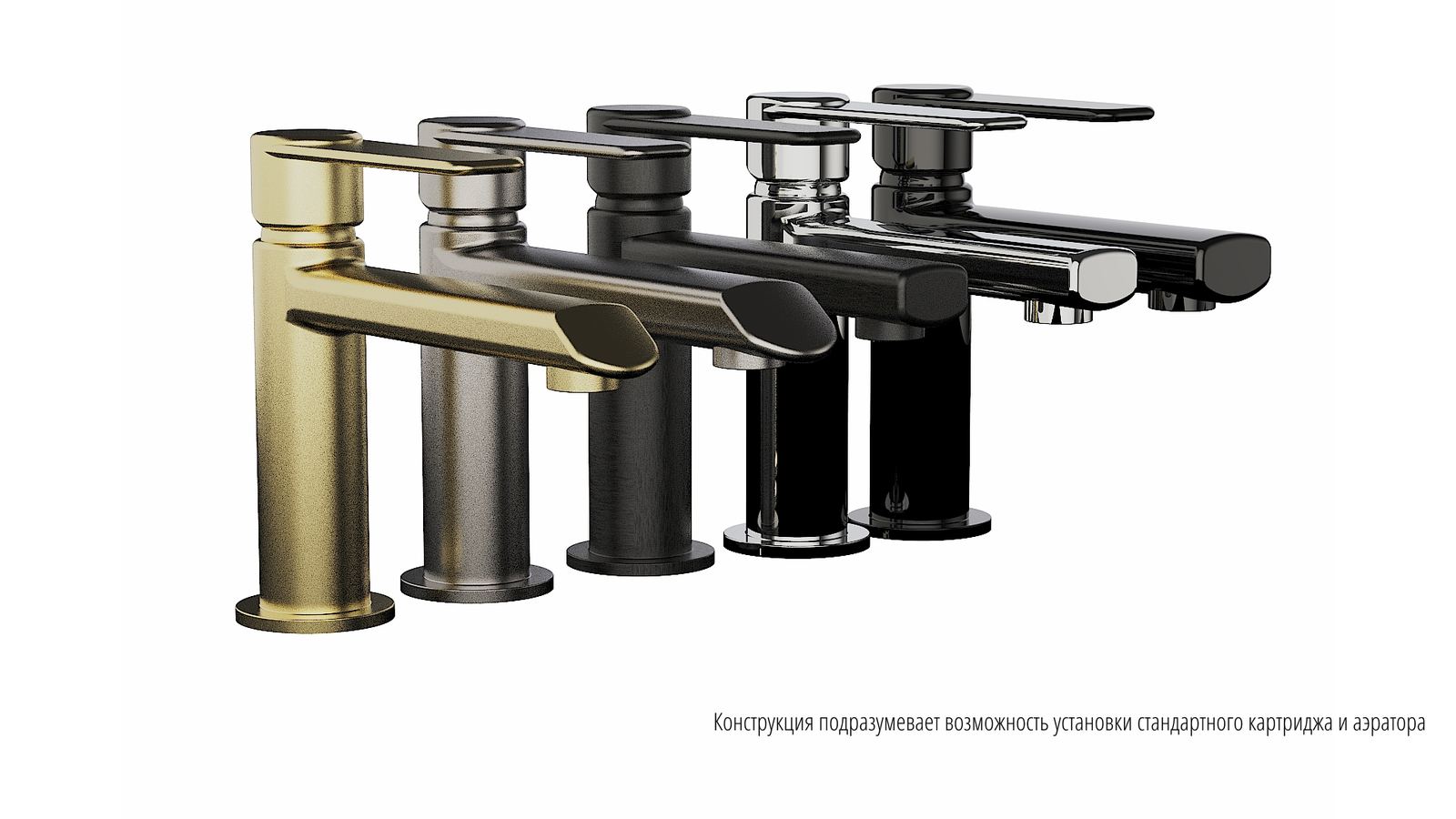
The concept was developed in five surface finish variants: matte black, gold, gunmetal bronze, chrome, and black chrome. All variants are electroplating or PVD on the same body. The manufacturer gets a range for different price segments without changes to the casting tooling.
CAD model for production
The Siemens NX model was built for die casting in zinc alloy (Zamak) — the standard for mid-tier faucet production. All draft angles for mould ejection are maintained. Critical joints are toleranced to achieve a visible gap of no more than 0.3 mm after assembly — the threshold between "looks expensive" and "looks cheap." Aerator and connector thread seats take standard metric tooling.
Visualisation
Renders were produced in Keyshot with separate material setups for each finish. Matte black requires one approach to lighting and reflections; gold is entirely different — showing warm metallic sheen without veering into "cheap plating." Each finish was shot at multiple angles: side view, three-quarter top, handle detail.
Result
The concept is production-ready. The CAD model contains all structural elements needed for tooling development. All internal units are compatible with standard off-the-shelf components. Five finishes from one model give the manufacturer positioning flexibility without capital investment in new tooling.
Applying this method elsewhere
The "new body, standard internals" approach extends well beyond bathroom fittings. Any consumer or light-industrial product with dated design and standard components inside is a candidate for the same work. The difference is exactly where it matters: how the product looks and how it's perceived on shelf — not how it works, since that part is already proven.